P J Hayman Takes Off by Launching PJH Flight Delay This August, in partnership with global InsurTech company Blink Parametric UK Limited, specialist travel insurance provider P J Hayman has enhanced its innovative product range further to launch PJH Flight Delay. PJH...
What Happens If You Travel Underinsured?
5.8 million Brits intentionally left for their holidays underinsured, without medical cover in place this summer. Were you one of them? While our understanding of travel insurance may not be as strong as our knowledge of the top people we’d choose for our fantasy football team or dream dinner party, we should make time to understand what our travel insurance can cover, as well as which medical conditions you should declare when taking out a travel insurance policy.
If you’re unsure of what a quality travel insurance policy covers, you’re not alone! In a recent survey by Admiral, 30% of travellers admitted they were unclear. Plus, 21% thought they only needed to declare a medical condition they were currently having treatment for. You may save money for not declaring a pre-existing medical condition – or even opting out of medical cover altogether – with a standard travel insurance policy. However, the risks can be costly if you travel underinsured, without appropriate insurance in place.
For instance, the average medical claim for medical expenses in 2024 was £1,528 (The Association of British Insurers (ABI)). Whether you live with a pre-existing medical condition or are having ongoing treatment, be honest and declare it all. Your health and bank balance will thank you if you’re confronted with an unforeseen medical emergency abroad.
Let us help you understand what a quality travel insurance policy will provide cover for. Plus, the risks you could face when not taking one out. Especially if you’ve recovered from a pre-existing medical condition that could make you underinsured.
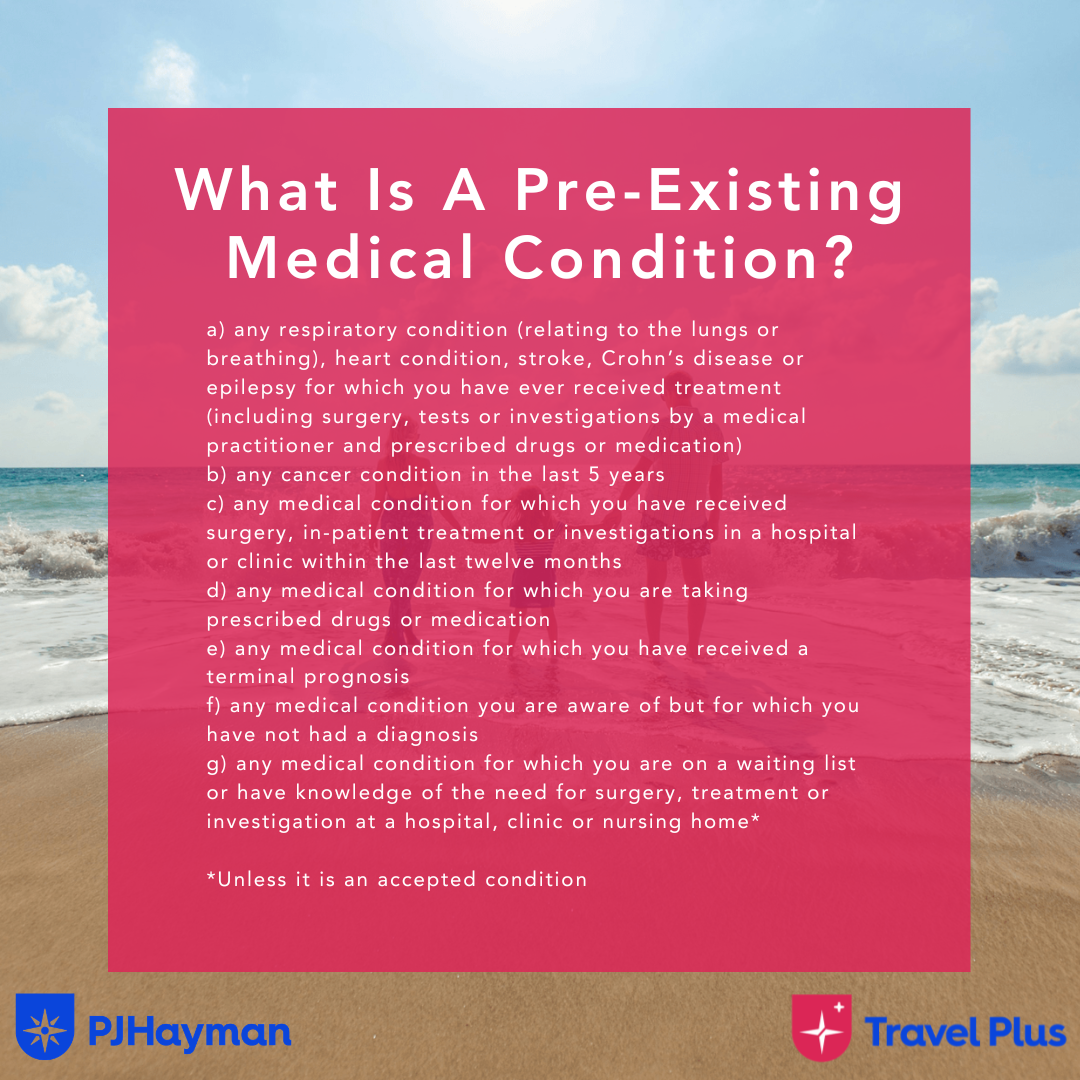
What counts as a pre-existing medical condition?
A pre-existing medical condition is anything you’ve been given a diagnosis for or take prescribed medication for. It’s not a legal requirement to take out medical cover. However, if you needed to cancel your trip due to your medical condition, you’d risk losing your deposit or money for cancellation costs.
What medical conditions must I declare?
When going through the medical screening process, current and pre-existing medical conditions must be declared, including:
- Any previous surgery
- Treatments received
- Medical conditions which are stable but no longer being treated
- Recent hospital visits, consultations or appointments you’re waiting for
- Prescribed medication
- Results and diagnosis
Please note: If you withhold details of your medical history, you’ll leave home underinsured and risk invalidating your travel insurance policy.
What is the Medical Screening Process?
Medical screening is an easy and straightforward process. It’s designed to help you declare all your medical conditions via a series of relevant but simple questions. For example, our leading questions include ‘In the last five years have you…’ or ‘In the last two years have you…’. These questions help us to narrow down your answers.
Medical screening should be completed by people living with diagnosed, stable and well-controlled conditions and/or disabilities. Our robust Free Spirit and Longstay & Gap Year policies provide cover for most medical conditions, and they will require you to go through the medical screening process. We aim to provide you with a specialist travel insurance policy which best suits your needs!
To make your life easier, we’ve included an AI function (a chatbot called Selma) to help you navigate the online quote process and answer your questions, should you need help, call our in-house experts who’ll provide an empathetic service. While genuine mistakes are common (made by 27% of travellers in a recent report by Verisk), you need to ensure that you or whoever is applying for the policy understands your medical condition(s), so you’re not left underinsured.
Katie, Free Spirit Customer Sales Assistant, added:
“I think one of the main ways we help customers with the medical side of their application is on the phone. Whilst we are not medically trained, and it is ultimately their responsibility to declare all the necessary information, we can provide a level of support on the phone that is more personable.
We can help them identify which of their medical conditions are relevant to the application, and if customers are ever unsure about something, we strongly urge them to check.
For example, a customer has medication for a heart condition, but they don’t remember the name of it. We don’t play a guessing game, take their symptoms, and record what we think. We explain to them that a quote cannot be provided until all information is 100%. We will then save the application, provide a reference number, add some notes, and ask that they call back to finish once they have the information…I think it shows that as a company, we do care.
In terms of the online application, I think we help by having our questions asked in a clear and concise way, and the AI chatbot and our phone number are on hand if anyone requires more support.”
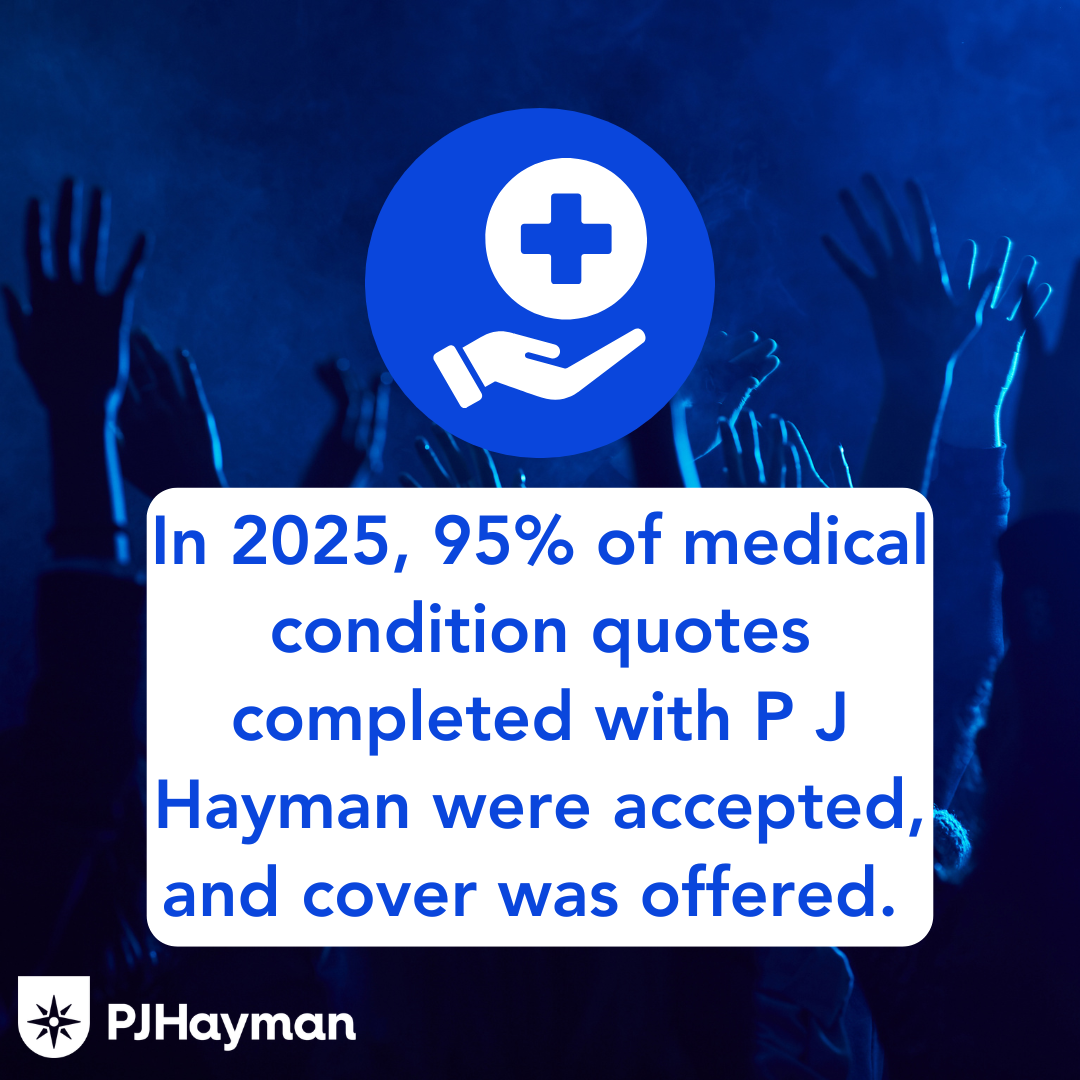
Whether you complete your quote over the phone or online, you’ll soon be on your way to being fully covered for your holiday. In 2025, 95% of medical condition quotes completed were accepted, and cover was offered.
However, what if you just need to declare a pre-existing medical condition?
Consider Travel Plus
Travel Plus is a unique stress-free policy that can be completed quickly and easily without medical screening. Suitable for people living with minor pre-existing medical conditions, Travel Plus provides cover you can trust.
Download the accepted medical conditions list that Travel Plus provides cover for.
Why is travel insurance more expensive with medical conditions?
There are many reasons why travel insurance can be expensive, such as when you add a pre-existing medical condition to the policy. However, not declaring one to lower your premium can incur risks. For example, if you don’t declare a medical condition and you need medical treatment, your claim could be rejected. This then increases the cost of your holiday.
Remember that the true costs of falling ill abroad can exceed several thousand pounds. For instance, in a USA state hospital, the average cost of medical expenses and repatriation costs are £157,246.69, which most people can’t afford. So, declare all your medical conditions after sourcing a high-quality travel insurance policy to ensure you don’t leave home underinsured.
What does a quality travel insurance policy include?
- Medical cover for medical conditions. Some policies can exclude cover for existing medical conditions, so check the policy wording.
- A 24/7 emergency assistance helpline. An additional bonus when you need help.
- Cover for repatriation. Repatriation cover protects you against the costs of transporting you (or an insured friend/family member) home after your medical treatment or passing away while abroad. This may include an air ambulance.
- Cover for travel disruption such as a flight cancellation or flight delay. This includes the cost for additional accommodation and travel expenses to help you reach your overseas destination or return home.
- Activity cover for the adventurous activities you plan to do.
- Cover for the type of trip, such as a cruise or winter sports focused trip.
- Cover for the destination(s) you plan to visit. Refer to the Foreign, Commonwealth and Development Office (FCDO) travel advice website to check if a destination is safe to visit. If it’s deemed unsafe, it will be unlikely for an insurer to provide cover.
- A form of natural disaster or catastrophe cover to protect you from unforeseen risks, such as hurricanes and forest fires. These are increasing.
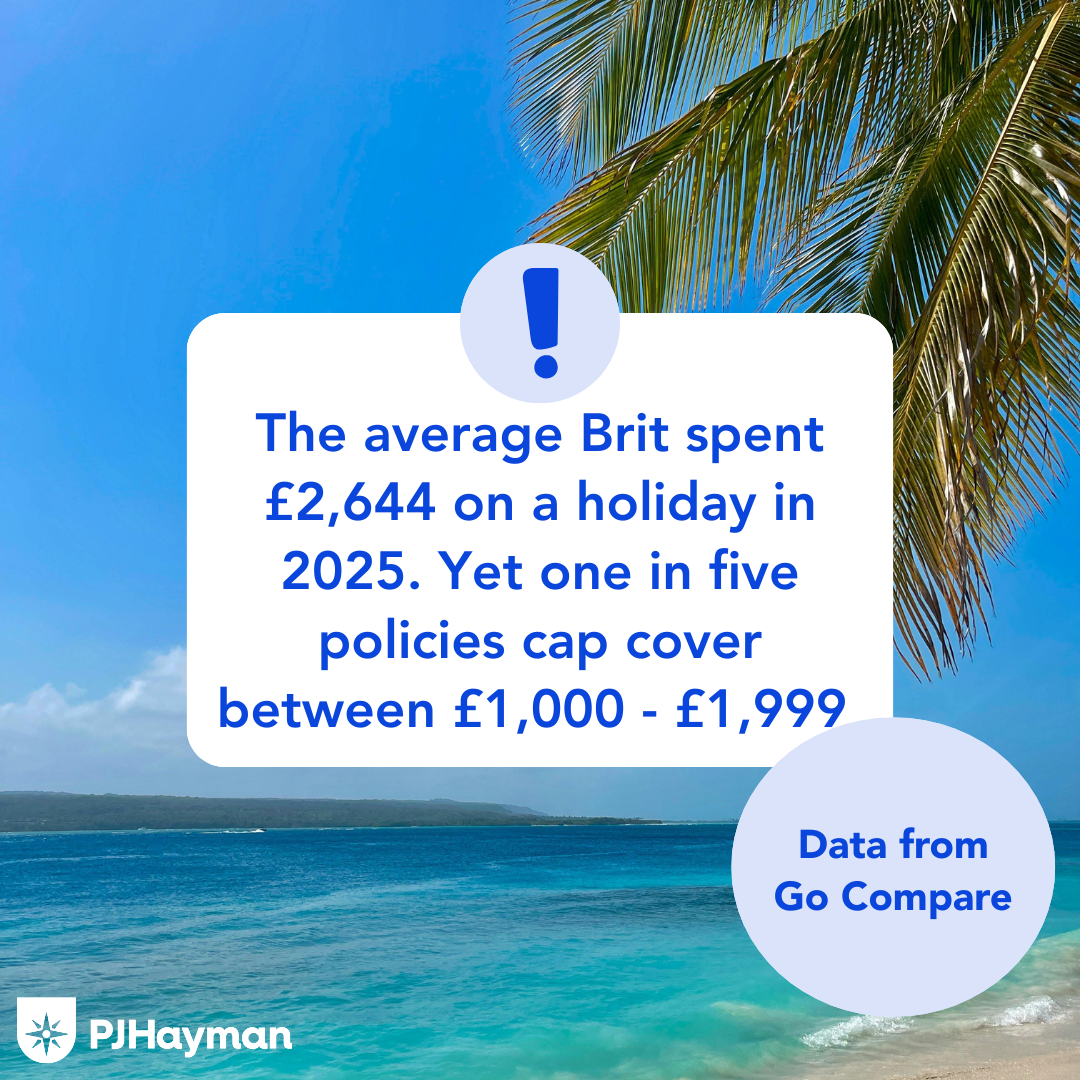
- Cancellation and Curtailment cover from £1,000 – £5,000 per person, if you need to cancel a trip due to an emergency hospital visit. The average Brit spent £2,644 on a holiday in 2025, so check your cancellation cover limit. Check out Top Up My Cover if your trip requires further cancellation cover.
Tip: Buy your travel insurance as soon as you book (ASAYB) your trip to get more from the price of your policy.
Travel insurance vs the cost of being underinsured
Despite the cost of high-quality travel insurance, the cost of being underinsured is far greater.
The following stats illustrate the costs of failing to declare a medical condition:
- A painkiller prescription in France costs £40, while in the USA the cost is £1,250
- Medical repatriation from Europe to the UK costs £7,000 upwards
- The cost to treat a heart attack/bypass in Thailand stands at £40,000
(All stats from Admiral UK)
Taking out travel insurance is a good idea.
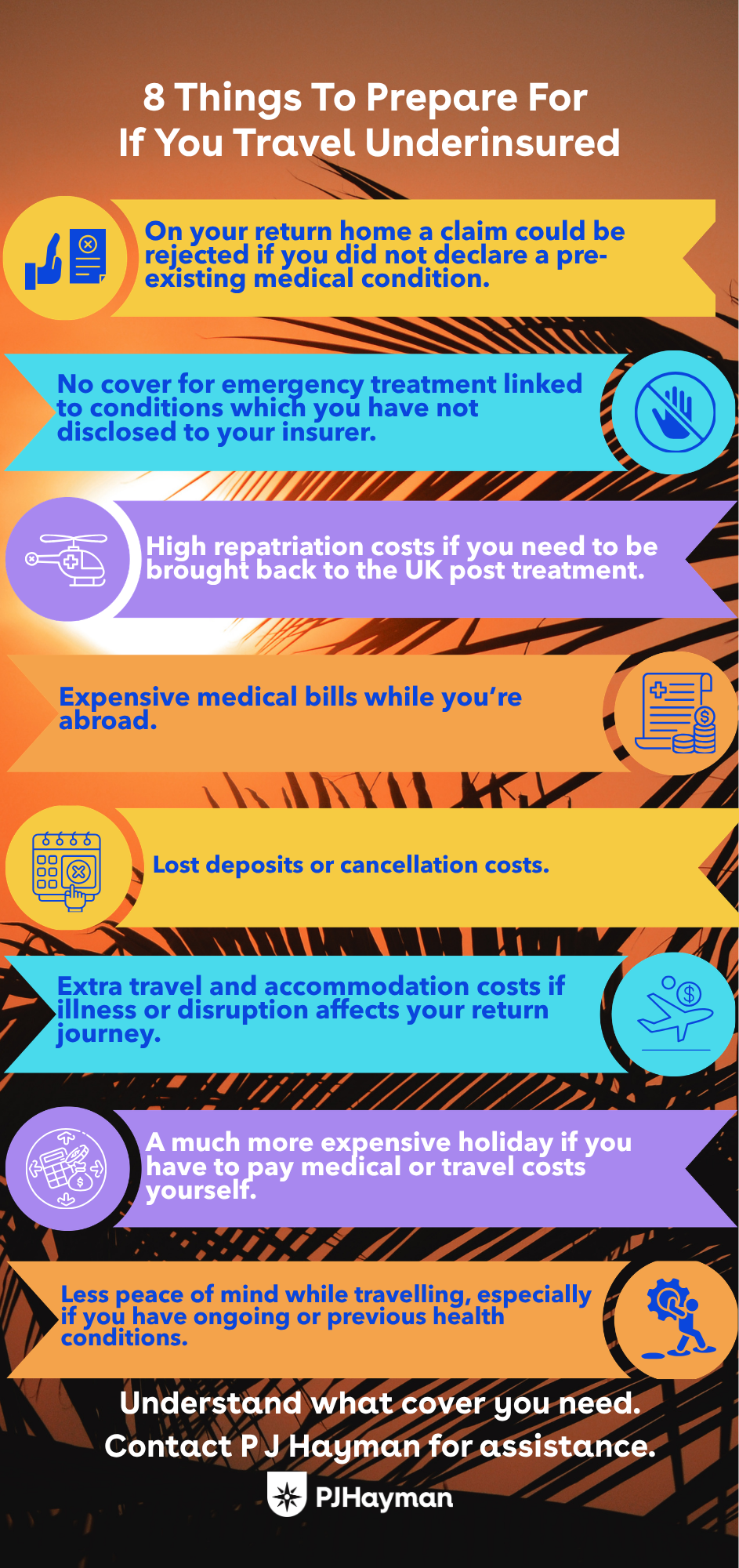
In summary, here are 8 things you could face if you travel underinsured:
- Your claim could be rejected if you did not declare a pre-existing medical condition
- Expensive medical bills abroad
- High repatriation costs if you need to be brought back to the UK post-treatment
- Lost deposits or cancellation costs
- No cover for emergency treatment linked to conditions which you have not disclosed to your insurer
- Extra travel and accommodation costs if illness or disruption affects your return journey
- A much more expensive holiday if you have to pay medical or travel costs yourself
- Less peace of mind while travelling, especially if you have ongoing or previous health conditions
Don’t travel underinsured
Get a quote for Free Spirit travel insurance
Free Spirit gives you the freedom to travel with confidence! It provides cover for most medical conditions and/or disabilities.
Get a quote for Longstay & Gap Year travel insurance
Longstay & Gap Year covers extended trips, gap years and if you’re studying or working abroad. Plus, cover for most minor medical conditions.
Get a quote for Travel Plus travel insurance
Travel Plus provides cover for pre-existing medical conditions without the need for medical screening. It’s travel insurance simplified!


0 Comments