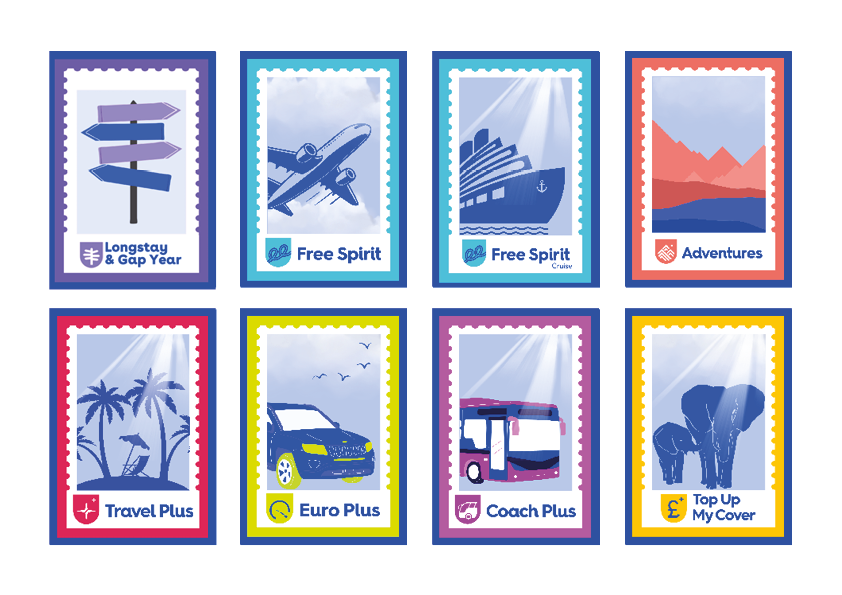
Free Spirit

For travellers of any age with medical conditions.

Travel Plus

Travel Insurance, simplified.

Adventures

For hazardous activities while overseas.

Longstay & Gap Year

Insurance For Life's Great Adventures

Top Up My Cancellation Cover

Up to £50,000 additional cancellation cover.

High Value Cancellation Cover

Cover for ultra high net worth travel.

Coach Plus

Especially for Coach Trips in the Uk & Europe.

Euro Plus

European motor breakdown cover.

Travel Insurance Solutions

Travel insurance for bespoke high risks.

Cruise Travel Insurance

Find out more about our cruise specific benefits available with Free Spirit and Travel Plus.

Solo Travel Insurance

Travel Insurance to cover for those people who are travelling solo.

Medical Travel Insurance

We can cover most pre-existing medical conditions and disabilities.

High Risk Travel Insurance

P J Hayman’s range of travel insurance solutions to cover high risks.

Activity Cover

Several of our policies cover a range of activities as standard, find out more here.

UK Travel Insurance

We have policies that can provide travel insurance for UK only trips.

Mission, Vision & Values

Giving travellers the freedom to travel, with confidence.

Our History

Over thirty years providing specialist travel insurance solutions.

Reviews

Happy customers are at the heart of everything we do.

Awards

Our work has been recognised in some prestigious awards.

Our Team

The people who make P J Hayman what it is.

Our Services

P J Hayman's range of in-house services.

Broking

Work with us and learn more about travel insurance.

Open an Account

Find out how to open an account with us.

Broker Support

Useful information such as visual aids & guides.

Work With Us

View P J Hayman’s range of in-house services.

Broker Login

Click here to login to your broker account.

Contact

Find out contact details here.

Top 5 Medical Conditions Covered for Emergency Medical Costs

Top 5 Medical Conditions Covered for Emergency Medical Costs

Top 5 Medical Conditions Covered for Emergency Medical Costs In 2025, 95% of medical condition quotes completed with P J Hayman were accepted, and cover was offered. Getting travel insurance when you have pre-existing medical conditions can be challenging. That’s...

Why is Having Holiday Cancellation Cover Important?

Why is Having Holiday Cancellation Cover Important?

Why is Having Holiday Cancellation Cover Important? Holiday Cancellation Cover is a key feature of a travel insurance policy. If your holiday has to be cancelled unexpectedly, you'll miss the holiday. Yet you'll be compensated for any prepaid costs that can't be...

You’ve Spoken, We’ve Listened

You’ve Spoken, We’ve Listened

You've Spoken, We've Listened At P J Hayman, we’re always looking for ways to improve our service. With this in mind, we’ve found a way to make our service as tailored to our clients as possible. Any feedback we’ve received, we’ve taken on board, and where possible,...

Biometric Entry/Exit System BLOG BANNER

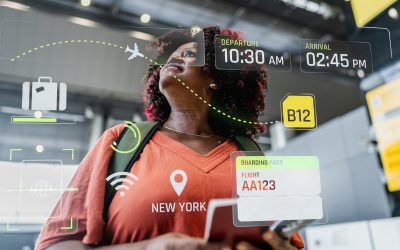
What is the EU’s Biometric Entry/Exit System – EES?

The European Union’s (EU’s) biometric Entry/Exit System (EES) has now been fully implemented. From Friday 10th April 2026, the EES, dubbed  “the most modern digital border management system in the world”, will be in action in EU countries within the Schengen Area. 

Let us explain the purpose of the EES for UK travellers, while reassuring you as to how it will work. Plus, we’ll take a look at what makes the EU’s biometric Entry/Exit System stand out from other border control processes.

What is the EU’s Biometric Entry/Exit System?

The EES is an automated IT system that now operates at airports, land borders, and ports within the Schengen Area. It registers all the movements of “third-country nationals” (visitors from non-EU countries) who have booked a short stay in 25 EU countries (it will not apply in Ireland or Cyprus, Iceland, Liechtenstein, Norway and Switzerland).

As British passport holders are “third-country nationals”, each time we travel from the UK to an EU country, we’ll be required to join a new queue. Our passports (or other travel documents) will need to be scanned at an automated self-service kiosk. We’ll then be able to cross the border.

Thanks to cutting-edge technology, scanning your passports or travel documents should be a swift procedure. The first time a traveller completes the process, their biometric data (fingerprints and facial images) will be captured and recorded on the system. Also, the time, date, and place of their entry/exit will be registered so the duration of their authorised stay can be calculated.

This is in addition to the following checks that border officials are required to note:

  • The purpose of a traveller’s visit
  • That the traveller has not stayed for over 90 days within the past 180 days
  • The traveller has an onward or return ticket, alongside additional monies to fund the entire length of their stay

For an overview, watch a short video created by the UK Home Office that explains how the EES works.

World map chess board

Where will EES checks take place?

In Europe, within the Schengen area, the EES will affect your trip if you arrive and leave an airport or port.

When travelling via the Port of Dover or via the Eurostar or the Eurotunnel (leaving the UK at Folkestone), you’ll need to complete the EES process when passing through passport control in the UK when departing. This is because there is a dual border at these departure points – for both Britain and France. When leaving the Schengen area via port, Eurostar or Eurotunnel, you may need to provide your fingerprint or photo too.

UK travellers going to the Schengen area by Eurostar from London St Pancras International will be required to use self-service pre-registration kiosks. They will be located in three different areas of the station. You’ll need to make a stop at these before going through the ticket barriers.

You may be questioning how long the queues will be at peak times at Dover. There’s no need to worry. The government pledged £10.5 million to prepare the port of Dover, Eurostar and Eurotunnel for the rollout of the EU digital border system.

Furthermore, the UK government continues to work alongside the European Commission, EU member states, local authorities and the travel industry to support operational pressures at UK ports. In addition, if you have accessibility needs, provisions have been put in place to assist you further.

EES border checks

What are the benefits of the Biometric Entry/Exit System?

Manual passport stamping will end because the EES is set to replace it. So, border control should be less time-consuming. Only in Cyprus and Ireland will a passport be stamped manually.

If UK travellers travel regularly to the EU, they’ll only need to register and submit their fingerprints, and provide a facial biometric once every three years. Then, after their first visit to the region, only their facial biometrics will be used.

When walking through the EES System with a valid passport, they’ll have the freedom to travel around the EU. Then, when they need to renew their passport, they will only be required to register a new facial biometric registration.

It’s important to note that EES registration will take an extra few minutes to complete. As such, you may wait slightly longer at border control when the system gets up and running.

View some travel advice on passports to ensure you have the freedom to travel.

the entry/exit system will will include you fingerprints and photo being taken

What makes the EU’s Biometric Entry/Exit System stand out?

The biometric Entry/Exit System (EES) is a niche technology that has been developed and managed by the eu-LISA (European Union Agency for the Operational Management of Large-Scale IT Systems in the Area of Freedom, Security and Justice). The eu-LISA aims to collect valid and reliable data at border control throughout the European Union.

The eu-LISA’S objectives for the EES are:

  • To ensure visitors who’ve exceeded the maximum duration of their stay are detected
  • To detect, document, and identify fraud instantly
  • To prevent irregular migration, to enhance the safety and security of EU citizens
  • To detect, prevent, and investigate terrorist offences. Plus, further criminal offences that could cause serious harm

Since the first implementation on Sunday 12th October 2025, the European Commission reports that registrations are increasing. Plus, early security benefits are emerging, such as detection of overstays and document fraud.

Also, it is hoped that third-country nationals will be able to travel quicker and more comfortably due to this new large-scale IT system that uses automated biometric technology.

Should we be concerned about how our biometric data will be stored?

Collecting biometrics can have an impact on a traveller’s privacy.  However, the technology used ensures that travellers’ fundamental rights are protected.

View more information and answers about the EES

When will the EES start?

The EU Entry/Exit System will be fully implemented on Friday 10th April.

The EU Entry/Exit System (EES) involves checks at border control when travelling around Europe.

What happens when a traveller has already entered the Schengen area prior to the EES launch date, but exits the Schengen area after EES has been launched?

Travellers who are in the Schengen area prior to EES implementation may be registered for EES on exit, depending on their departure port. They will not need to do anything to prepare for this.

Is there anything travellers can do in advance of travelling?

No. Travellers will need to submit their biometric details at the Schengen border, and only once EES is introduced. It is not currently possible to register biometric details in advance of the border.

What will follow the biometric Entry/Exit System?

Another large-scale IT system due to follow the EES is the ETIAS (European Travel Information and Authorisation System). The ETIAS is a pre-travel authorisation system that will include an additional fee as part of the authorisation process. It’s for visa-exempt visitors – a visa-waiver.

Again, it will apply to all British passport holders to tighten security and border controls. Also, it will be valid for three years, or until a passport is invalid. However, it can be completed online before leaving home, instead of border control.

Currently, there is a €20 fee for the ETIAS as part of the authorisation process. Compared to the price of other travel documents and visas, this price appears reasonable. The ETIAS is set to go live in the autumn of 2026.

Visit the EU’s official travel website for up-to-date information and what will be required.

find more about the EU entry/exit system by visiting the GOV.UK website.

Travel With Confidence to Europe

If you’re planning a holiday to Europe, the EES is one more hoop to jump through. We hope we have provided all the essential travel advice and information about the EU’s biometric Entry/Exit System.

For further advice, visit the Gov UK website or refer to the Foreign, Commonwealth & Development Office (FCDO) website.

To help you travel with confidence in Europe, take one of our travel insurance products along for the adventure.

0 Comments

0 Comments

Submit a Comment

Your email address will not be published. Required fields are marked *